
Even now, automation rarely sees disabled users as its starting point. Tools designed to streamline, evaluate, or assist often replicate the gaps they promised to close. Across hiring platforms, chatbots, and identity verification tools, traces emerge – not of malice, but omission. Bias isn’t always loud. Sometimes it simply appears in who gets left out.
When Automation Fails Access
Bias in AI doesn’t always announce itself. It might flicker on a resume screen or freeze during a video ID scan. One applicant’s speech pattern delays chatbot routing. Another’s wheelchair confuses facial detection. These aren’t rare exceptions – they cluster in silence, until audits surface them.
Read also: Soft2Bet inclusive technology platform
A report from AI Now Institute noted how often disability disappears in fairness checks. Testing protocols optimize for age or race, but skip behavioral diversity. A recruiter once remarked that video interviews filter out weak communication. But what counts as weak? Slowness, repetition, silence? Or just a difference?
Even settings meant for accessibility can backfire. Voice commands ignore vocal tics. Autofill guesses wrong for neurodivergent typing rhythms. The result is friction – not in function, but in feeling unwelcome. And once that sense sets in, the tool isn’t neutral anymore.
Auditing Inclusion in Algorithmic Design
Fixing bias doesn’t begin in code. It begins in how data gets defined, and who reviews edge cases. Inclusion audits help map the blind spots.
Methods include:
- User testing with diverse disability profiles
- Stress tests for input variation (speech, motion, pacing)
- Flagging when assistance tools create new friction
- Involving disability advocates in review loops
Microsoft’s fairness guidelines recommend transparency on who gets tested – and who doesn’t. That sounds obvious. Yet most systems still assume standard input. The audit often becomes the first time a tool meets its real user range.
The Limits of Behavioral Prediction
Much of AI assumes predictability: patterns in speech, posture, keystrokes. But for many disabled users, those patterns shift. Hour to hour, day to day. A blink might be intentional. A pause might be processing. Behavioral irregularity isn’t error. It’s context.
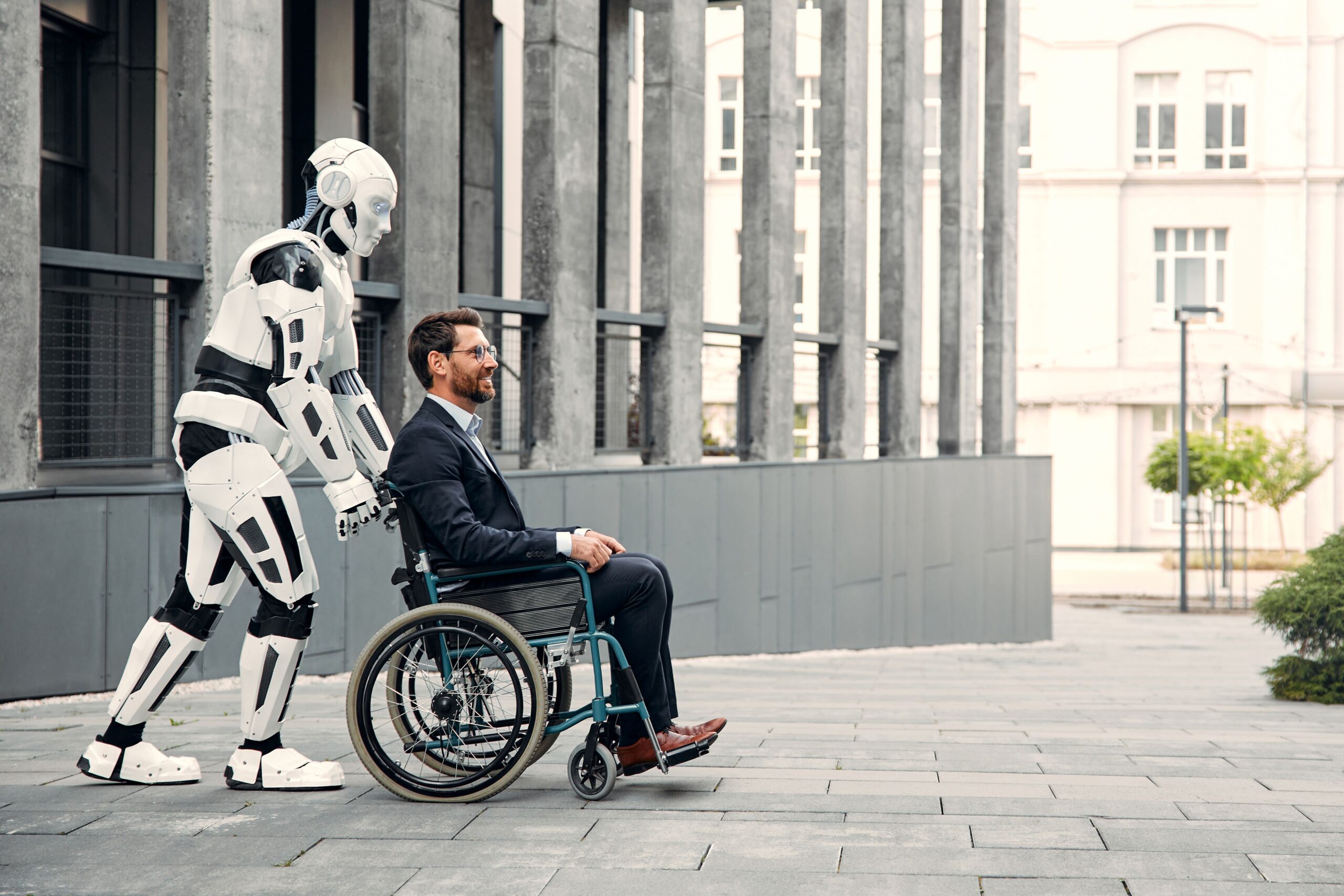
Resume sorters, for instance, flag “gaps” as risk. But what if a pause in employment reflects inaccessibility? And what happens when that absence feeds back into future training sets? The bias then isn’t just present – it’s compounding.
Even help systems miss the mark. A chatbot that reroutes after three unrecognized inputs might interpret stimming as spam. One design team noted a test case where the system assumed distress, when the user was calm, just nonverbal. Recognition collapsed into reaction. The machine moved, but didn’t understand.
Toward a Different Standard of Intelligence
AI doesn’t need to replicate human judgment. But it does need to respect human variation. That begins by shifting its core measure: from consistency to responsiveness.
What changes when bias is measured not only by outcome, but by friction? When design success includes the ability to pause, adapt, misread – and still recover?
Inclusion in AI isn’t a module. It’s a method. And the audit isn’t just a correction – it’s an invitation to ask a different question. Not “how do we fix the error,” but “who was never centered here?”
Where tools begin to adapt to that question, systems shift. Not all at once. But perceptibly. And that’s where change holds.